- Grey Whiskers Senior Dog Digest
- Posts
- Real Time Advocacy for Old Dogs
Real Time Advocacy for Old Dogs
Not just a theory

Angela Dinsmoor
January 24, 2026


In this week’s issue, here’s what we are sniffing out
Real Life Meets Theory
This week I’m using some of our personal experience to illustrate the last two newsletters. It’s a coincidence that we were living these issues in real time. Many of you have said it helps to hear how this plays out in real life, so I’m sharing where we are now.

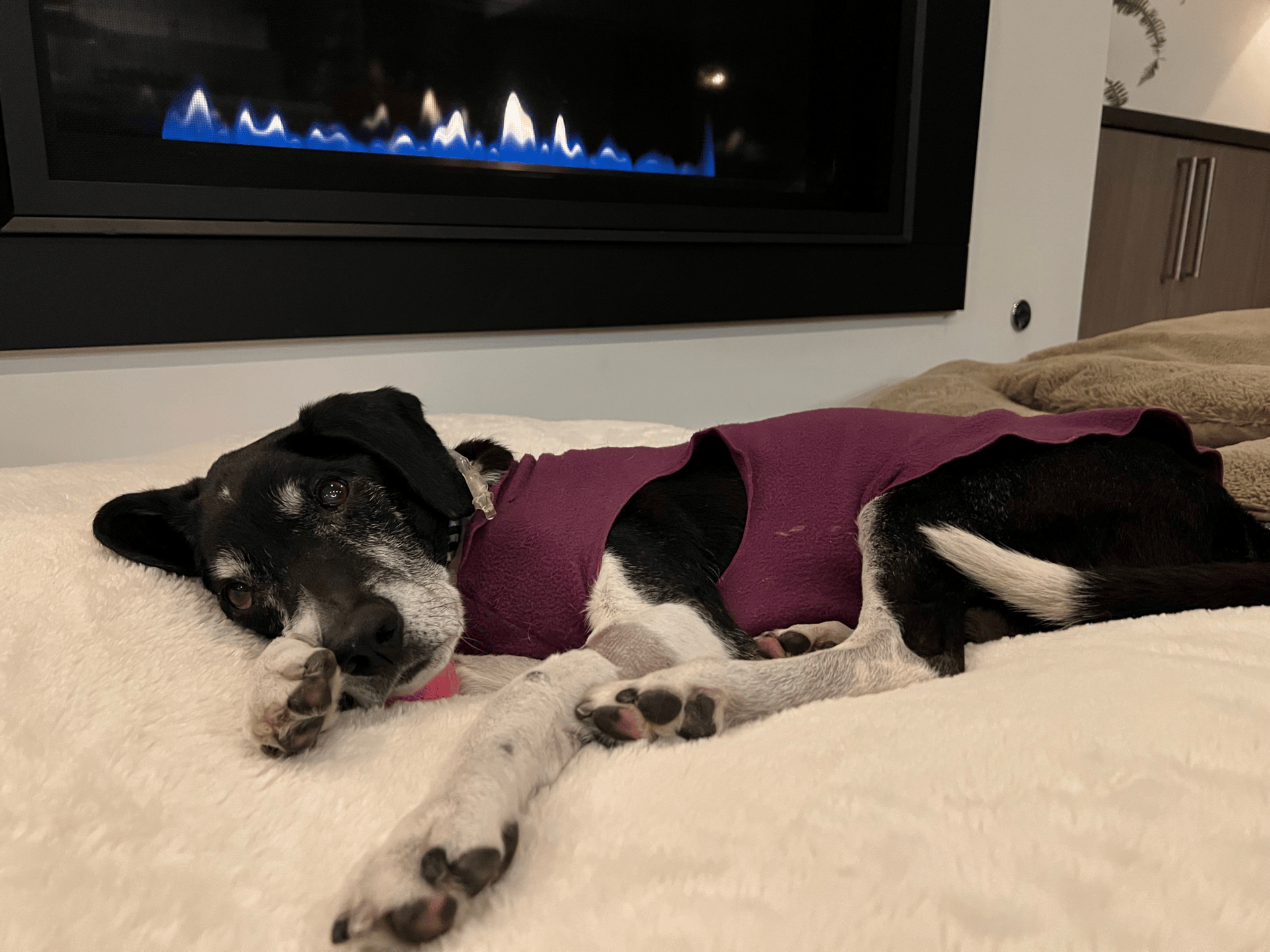
Uma in the hospital
Accepting
Uma will be 15 next month. She lives with several autoimmune conditions that we’ve managed well over the years. Over the past year, she’s had increasing complications, and we’ve been monitoring and adjusting her care as thoughtfully as we can.
When Uma is feeling well, she’s active, goofy, engaged with family life, eager for walks, car rides, and treats (much to the annoyance of her disinterested sister). When she’s not feeling well, she still wants connection with us and movement, even if play and appetite drop.
I consider this a good quality of life for a geriatric dog. She is medically fragile, but not confused, not depressed, and not withdrawing from us. I’m aware she’s declining, and I don’t expect her to return to who she was before this most recent shift. We have a new baseline as of now. This is acceptance. I’m not comparing her to 13-year-old Uma - certainly not 6-year-old Uma. I’m meeting her where she is today and honoring the joy she still has left for life.
Accepting Doesn’t Mean Doing Nothing
Two weeks ago, Uma got sicker. When we took her to the doctor, hospitalization was recommended. At the time, we believed this was likely a progression of her existing conditions and assumed we would be planning comfort-focused care going forward.
Instead of reacting immediately, we paused to gather a bit more information. What we learned changed the picture: there was a new issue, and it was potentially treatable. With that information, we re-evaluated and chose hospitalization.
Those hospital days were hard. The house felt unnaturally quiet without her. At the same time, I had to stay mentally available - ready for calls, decisions, and updates—while having nothing tangible to do. It was the purest form of “hurry up and wait.” Everything felt both urgent and distant at once. That’s when I did my middle of the night googles. Middle of the night fears are the biggest, aren’t they? They’re even bigger when you’re worried about your sweet old pup in the hospital.
After several days, she began to look more like herself and came home. We still don’t know how much time we have. What we do know is that we’re continuing to check ourselves - asking whether each decision serves Uma, not just our desire to keep her with us. We’re staying in close communication with her care team, advocating for comfort that allows her to remain present and engaged, and recognizing that this plan is a trial, not a promise.
If it stops fitting her reality, we’ll change course. It’s hard, but we know that isn’t failure. It’s follow-through.
This is what it looks like to accept aging while still advocating. We aren’t throwing everything at her, but we are choosing what fits this version of Uma, right now. Senior dog care is an ever-shifting landscape - moving baselines, good days and bad ones, uncertainty that doesn’t always mean the end, but sometimes does.
We don’t have guarantees or clarity. We have attention.
And for now, that’s where we are - taking things day by day.
Product Recommendations:
The Help’em Up Harness (https://helpemup.com/)
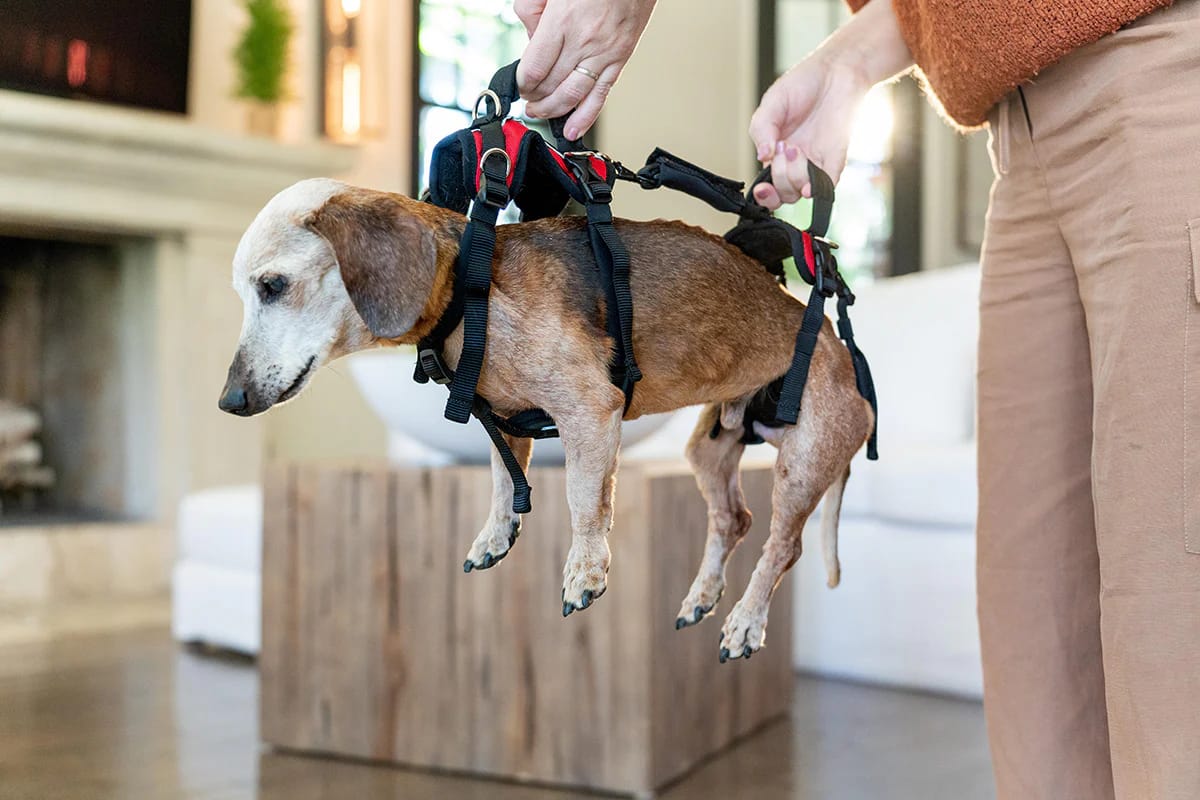
This harness is life-changing for larger dogs, but don’t underestimate its use for smaller ones as well! Those littles can really tax your back over time too. Great for in/out of the car, stairs and potty assists.
🐶 Sniffing Out Senior Dog News 📰
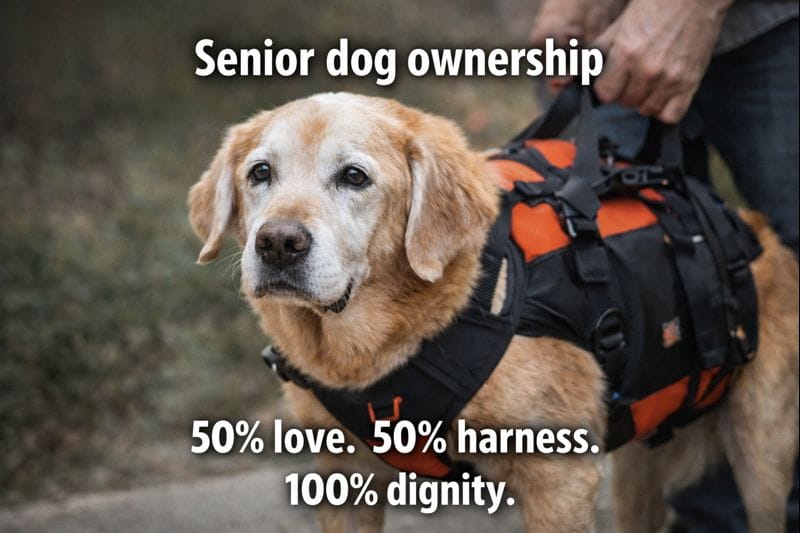
Senior Dog Meme of the Week
How did we do with this week’s newsletter?
High Paws
Pooped in the House