- Grey Whiskers Senior Dog Digest
- Posts
- Cold. Messy. Still Moving.
Cold. Messy. Still Moving.
Managing movement for senior dogs when the weather outside is frightful

Angela Dinsmoor
February 28, 2026


In this week’s issue, here’s what we are sniffing out
How to stay active when it’s cold, wet, icy, and generally uninviting
A Winter Movement Menu (outdoor, indoor, and “somewhere else”) so you’re not improvising every day
A 2‑minute mud station that makes leaving the house feel doable
The winter problem isn’t motivation. It’s logistics.
Well… mostly.
On paper, “just go for a walk” sounds simple. In real winter life, it’s slush, ice, muddy paws, 30-minute windows of “warmth” outside, and that one spot in the yard that turns into a mud trap the second the snow starts melting.
Who wants to get out in that?
I’m going to give you a plan that acknowledges the obvious: winter makes movement harder, and we still want our senior dogs to have a life that includes sniffing, novelty, and feeling like they had fun today.
Remember, winter movement doesn’t have to mean long. It has to mean consistent enough that you both keep the habit alive.
Mix, match or do all of them in short bursts every day.
Option 1: Outside, but make it realistic
These are “keep the routine alive” outings - not epic walks.
1) The 10‑minute “sniff walk” (my favorite winter cheat code)
If you can, aim for the warmest/brightest part of the day. Let your dog sniff. Wander. Do a slow loop. The goal is not steps; it’s engagement. Do the same short loop 2 times if your dog wants more.
The key: switch sides of the street for new sniffs.
2) The yard counts if the sidewalks are a mess
If you go out in the yard with your dog, more than likely they’ll tag along and stay outside longer than they will if you’re watching from inside - so bundle up and do a yard field trip together. Walk the perimeter, do a few slow laps, sniff all the corners, and reward yourselves for a job well done.
3) The “potty with a purpose” add‑on
Toss a “find it” snack in the snow. Make it high value and throw it right where they can see it so they don’t get lost looking for 30 minutes.

A younger me with my good friend Red
Option 2: Indoors at home (for the truly gross days)
You’re not trying to replace a walk. You’re trying to keep your dog’s day from shrinking.
1) Kibble scatter / “find it” game
Toss a meal (or part of it) across a rug, a snuffle mat, or put it into a puzzle toy. Sniffing is work.
2) The hallway loop
Pick a route inside your house and do 3–5 slow laps. Add a treat “station” at each end if your dog needs encouragement.
3) Treat towel / box sniffing
Fold treats into a towel. Or toss a few treats into a cardboard box with paper if that’s safe for your dog. Let them forage.
4) Gentle indoor fetch (short, controlled)
Soft toy, short distance, slow, gentle tosses. If they’re too uncomfortable to go fetch, or trying so hard they’ll hurt themselves, very gently toss the ball towards them* instead of away, or at them if they can catch*. In our house, this is known as “old lady fetch,” and it’s a real crowd pleaser, believe it or not. Uma, Purdy, Esther, and Groot would do this one for 15 minutes or more.
*These angles make a great photo op, so choose a space with good lighting, and get your camera ready.
5) The “two-minute training” reset
Pull a couple of easy cues out of your dog’s archives just to give the brain something to do. Only do what’s safe for your dog. Advanced arthritis? Swap sits and downs out for shakes or toy touches.
Option 3: Somewhere else (a true sanity saver)
This is the category that keeps many of us from losing our minds in the dead of winter: field trips.
1) Dog‑friendly store laps
Some retailers have leaned into the idea of indoor walks during cold weather. PetSmart even publicly encouraged indoor store walks during January’s Walk Your Dog Month.
If you do this:
Confirm dog policy before you go
Keep the visit short and about your dog - no marathon shopping sessions for the perfect snowblower
Go at off‑hours
Treat it like a sniff museum, not cardio. Take your time, and toss the occasional treat in front of your dog to keep them interested
Take potty bags, be prepared to clean up if needed
Skip it if your dog is stressed by strangers/dogs/carts
2) Rehab/PT or swim programs
If you have access, a canine rehab program or swim sessions can be a structured winter routine (especially if your dog enjoys water). This is an “ask your vet what fits your dog” category. Take towels for drying, and blankets and warm coats for the ride home if your old pup is a winter swimmer.
3) A friend’s house
Coffee or wine with a friend gives your dog a calm change of environment. Even a few minutes of sniffing is a huge win. Make sure your friend’s house is safe or keep your dog on a leash and walk with them till they’re ready to nap. Give them a soft surface to lie on if that’s what they’re used to.
The 2‑minute mud station
If winter walks feel like a whole production, set up a station that simplifies.
Put this by your door:
1 dog safe towel
a washable mat for floor
a small bowl of warm water (optional but game changer when you arrive back home with cold hands and paws)
OR this paw wash cup - one of my favorite tools
Dunk one end of the towel in the warm water or paw cup and wipe paws. Use the other end to dry. Done.
Swap out all of the above for wipes if you like to keep it even simpler. These extra large ones are nice since winter paw wiping shouldn’t also qualify as an Olympic sport.
Quick winter checks
A few practical reminders that make winter movement smoother:
Ice melt and winter chemicals exist. If you’re walking on treated sidewalks, up the priority of rinsing/wiping paws when you get home.
Short-coated or single coated seniors often need even more help staying warm than when young. A winter coat is a uniform, not a fashion statement.
Skip the sketchy surfaces. If it looks slippery to you, it’s way worse for them. Support your dog over icy patches so they don’t really get hurt. Old joints and muscles splay out wide in the blink of an eye.
🗞️ Sniffing Out Senior Dog News 📰
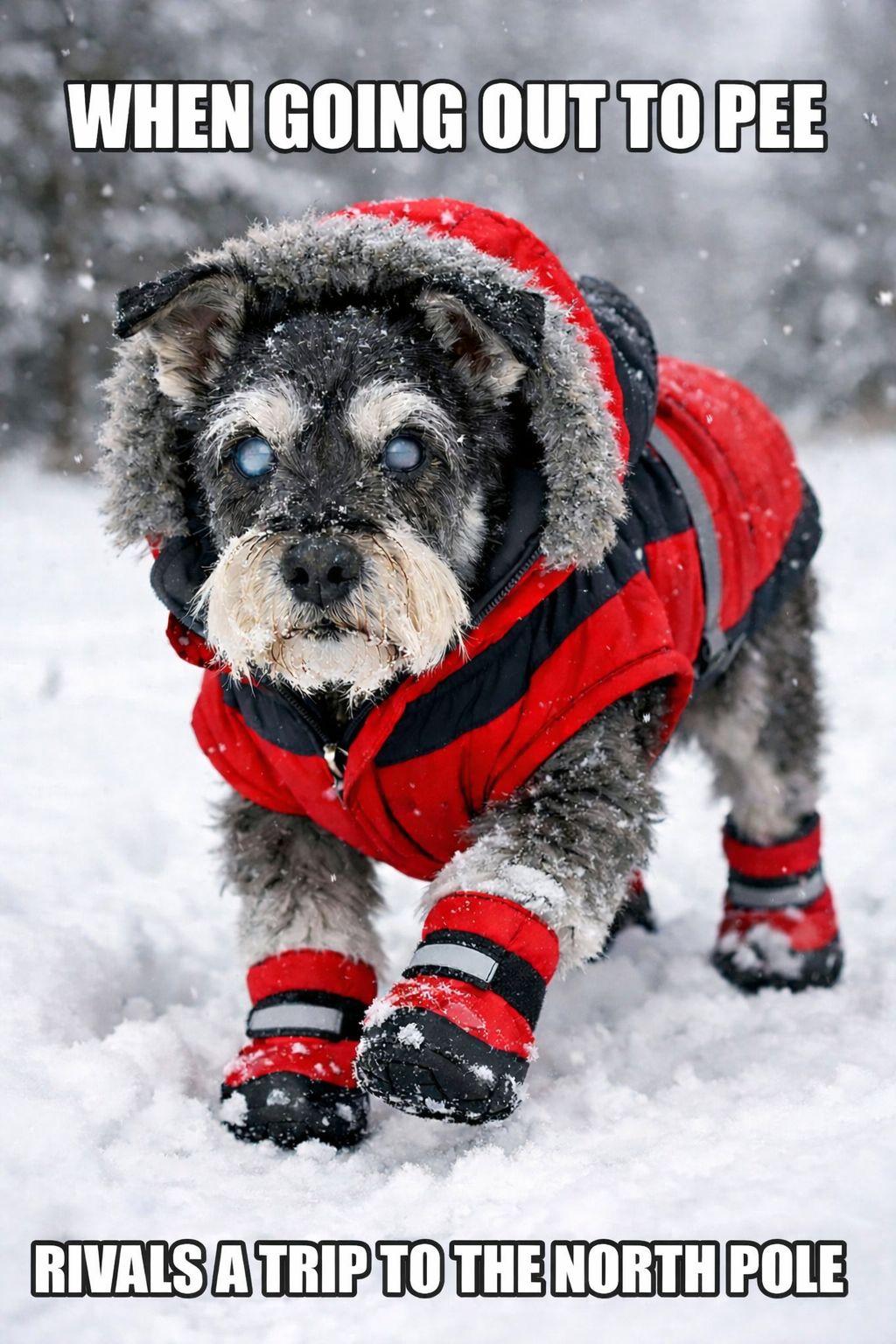
Senior Dog Meme of the Week